 Quiet Rhythm
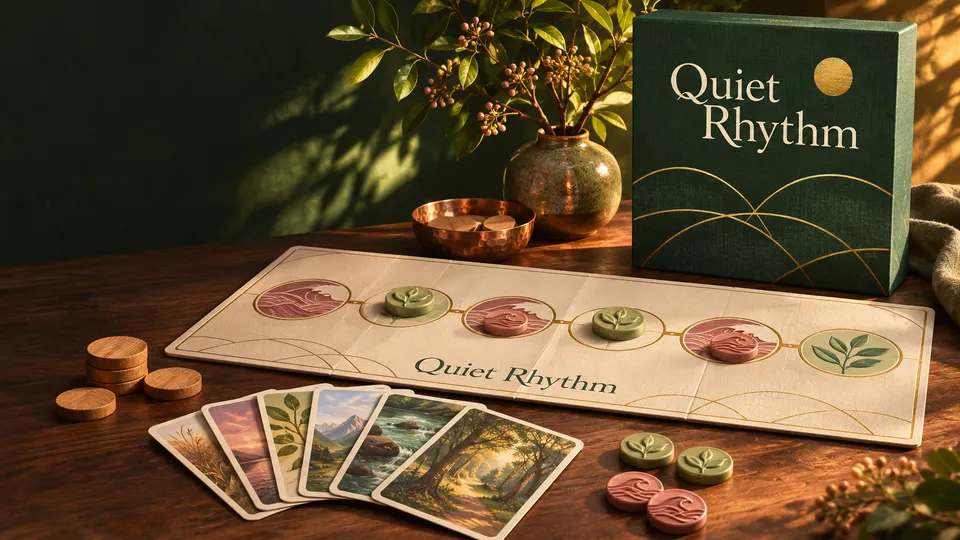
A cooperative tabletop game
Quiet
Rhythm
A tabletop game of patterns, balance & connection.
At the table
- Players
- 1–4 together
- First round
- 10–15 minutes
- Objective
- One shared pattern
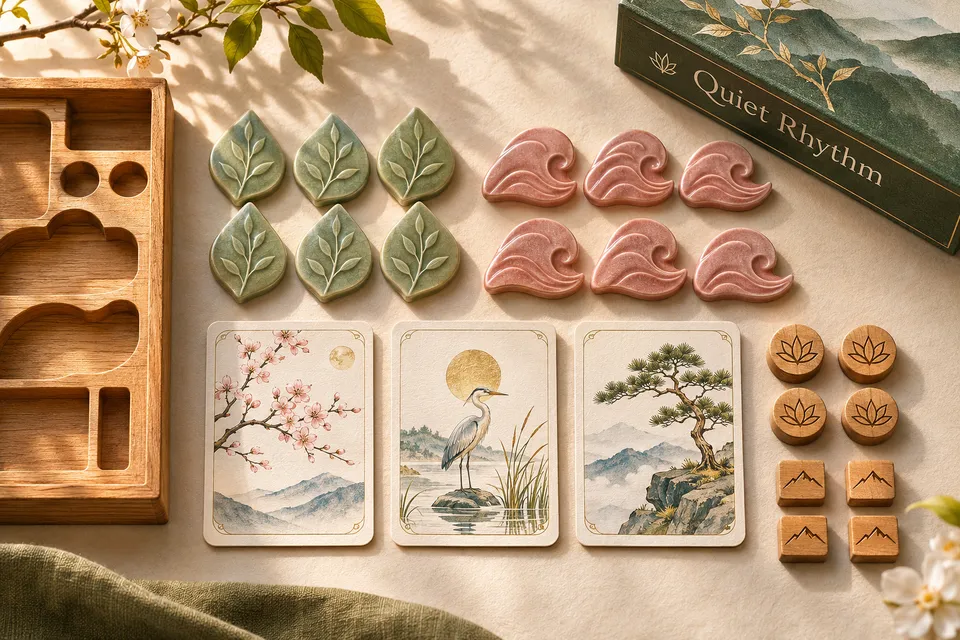
Inside the original game
Two motifs.
One shared trail.
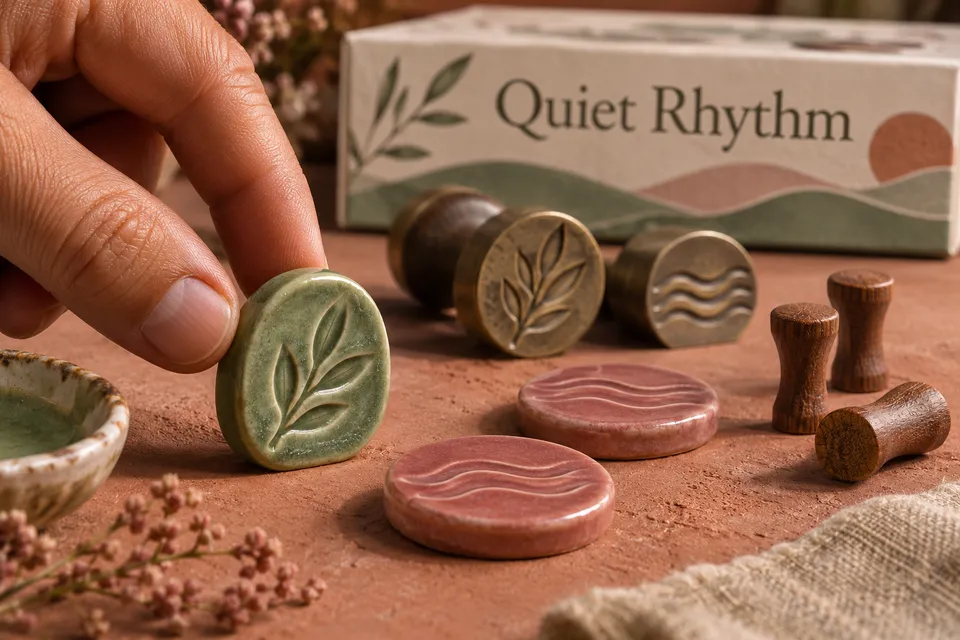
Run a finger along a leaf, then across the ridges of a wave. In Quiet Rhythm, those two shapes carry every decision. A change of shape earns a link. A repeat costs a link, but can leave just the token a neighbour needs.
Open the component tray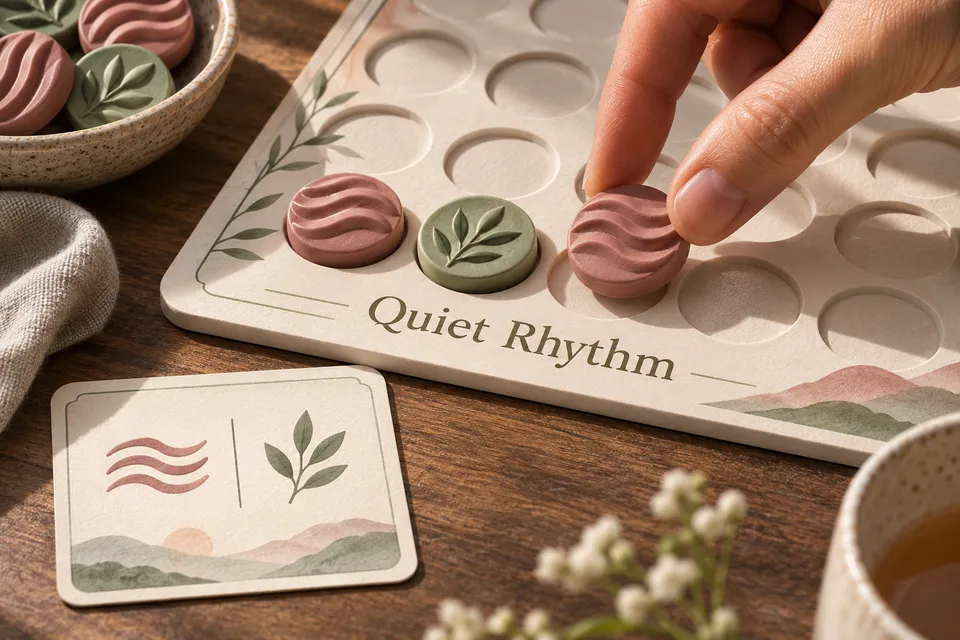
Learning the first move
What changes when you place a wave?
The card names the token. The token fills the leftmost open space. Its neighbour tells you whether you have made a link. Try both shapes on the same opening and compare the results.
Read the rulesQuiet Rhythm • Practice board
Interactive Turn Preview
Start with a leaf on the board. Choose the next cue card, then place its token. Watch the boundary between them.
- 1Empty
- 2Empty
- 3Empty
- 4Empty
- 5Empty
- 6Empty
The game collection
Four ways to play
Quiet Rhythm.
Keep the shared decision. Change what lies between the players. Follow a variation to its opening move, or compare all four in the Game Explorer.

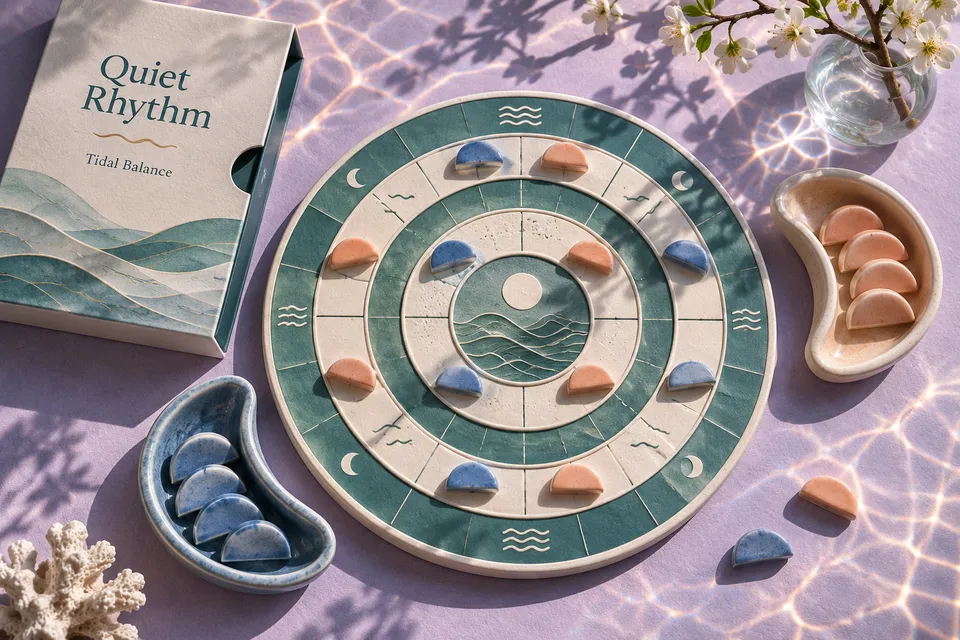
Quiet Rhythm: Moonlit Paths
Turn a lantern tile to keep a silver trail open.
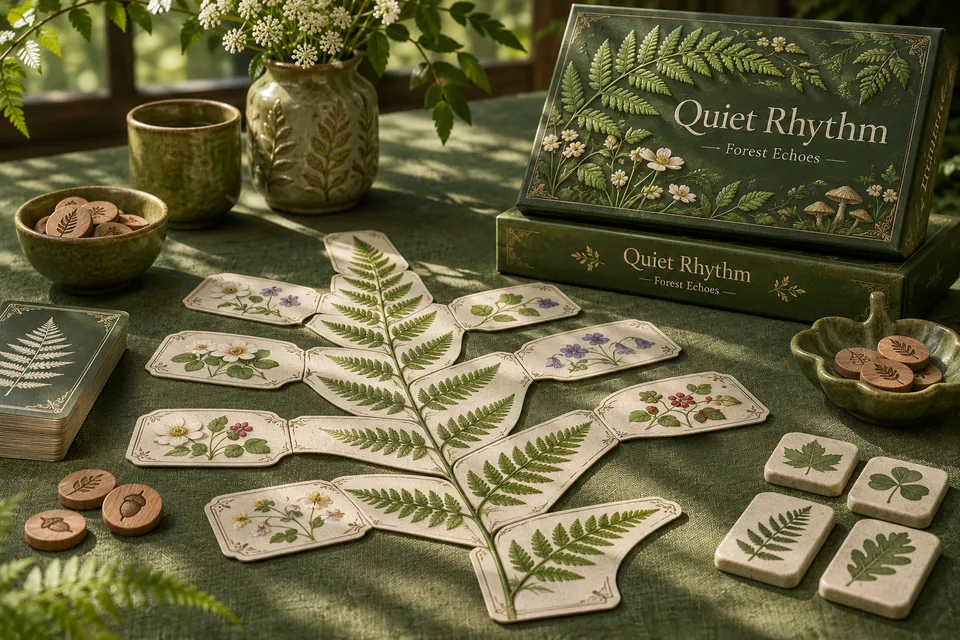
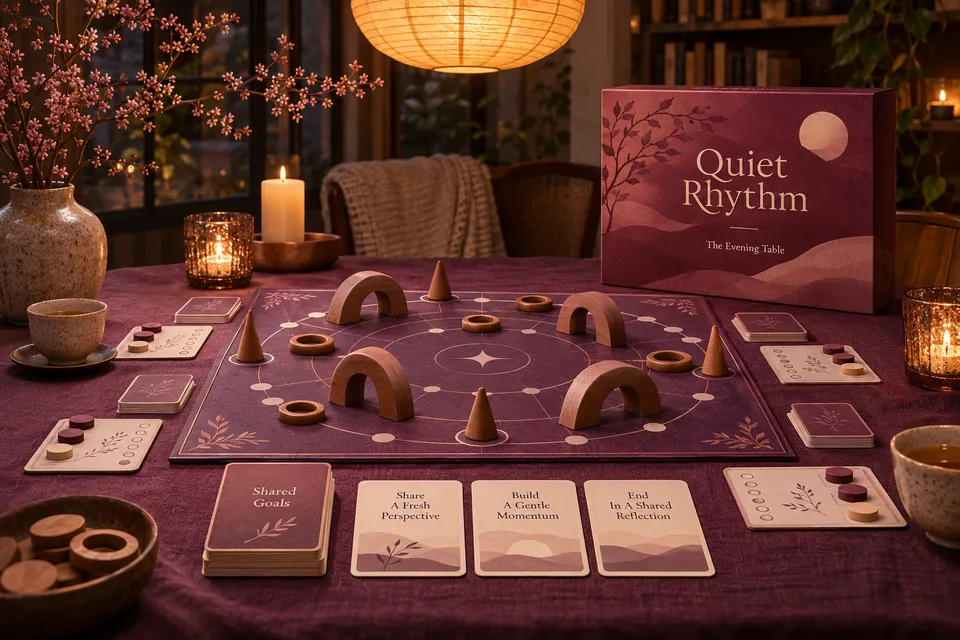
Read the spaces between.
A row of six tokens has five boundaries. Start at the left edge and touch each boundary once. Count one for a change of motif and zero for a repeat.
Set the table for a first round.
Mark off each step as you prepare. Your checklist is saved on this device.
The pieces
Reading by touch
Keep a thumb beside the last piece while comparing the two reserves. A pointed leaf and the ridge of a wave are easy to tell apart even when the board is turned towards another player.
Identify the piecesQuiet Rhythm • Practice board
Pattern & Balance Challenge
Make at least four links with three leaves and three waves. Try your sequence, then undo a move to see which boundary changed.
- 1Empty
- 2Empty
- 3Empty
- 4Empty
- 5Empty
- 6Empty
Playing together
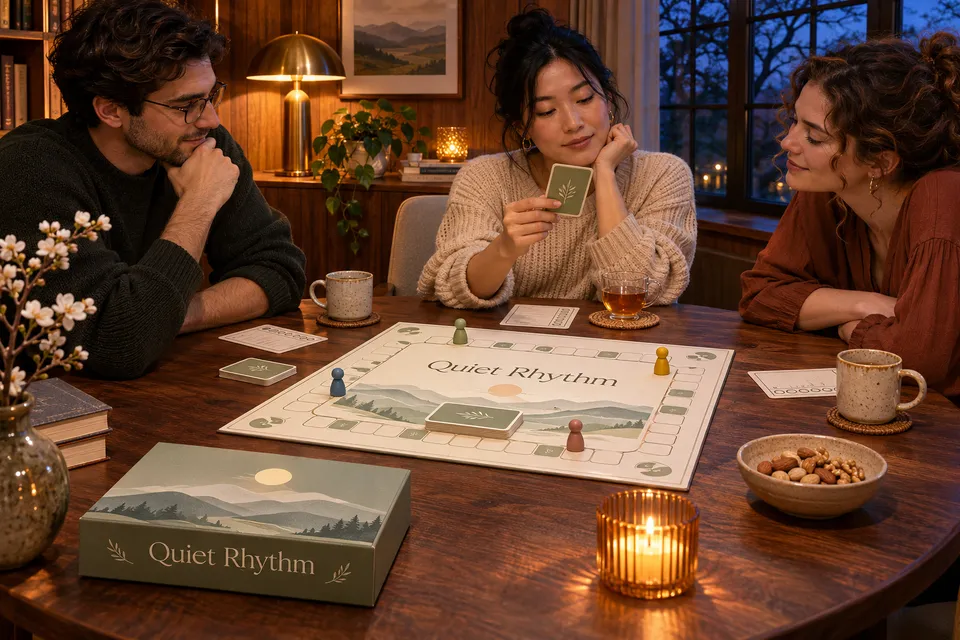
Give the next player room.
Say what you see before you suggest a move. “There are two waves left” gives the next player a decision. After the sixth placement, let someone who placed neither of the last two tokens count the links.
Table talk for a first game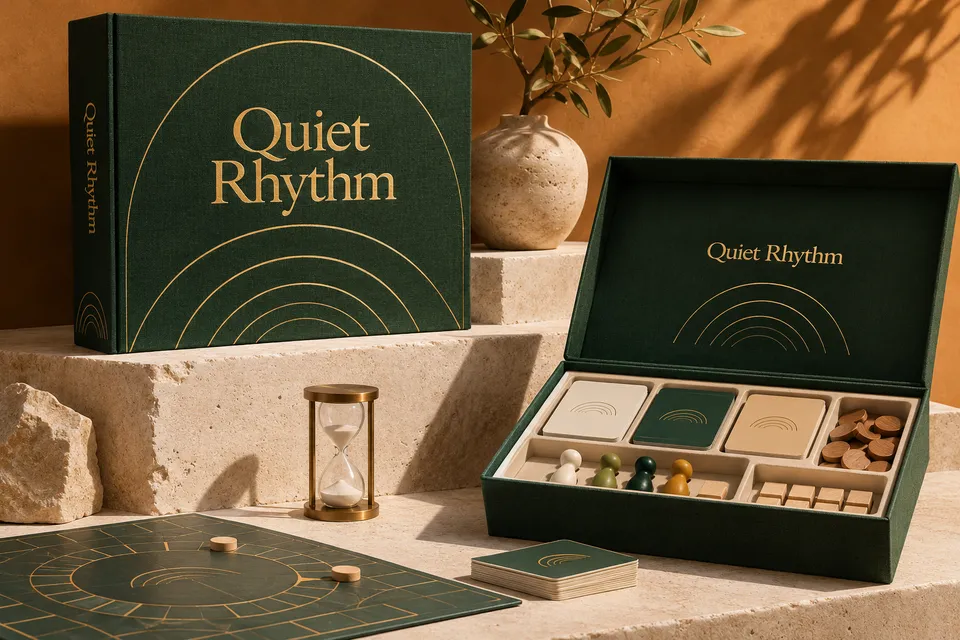
Packing the game
Back into the box
Lift the two cue cards first. Sweep each motif into its own recess and leave the markers in the shallow groove. Fold the board last so the hinge rests clear of the raised pieces.
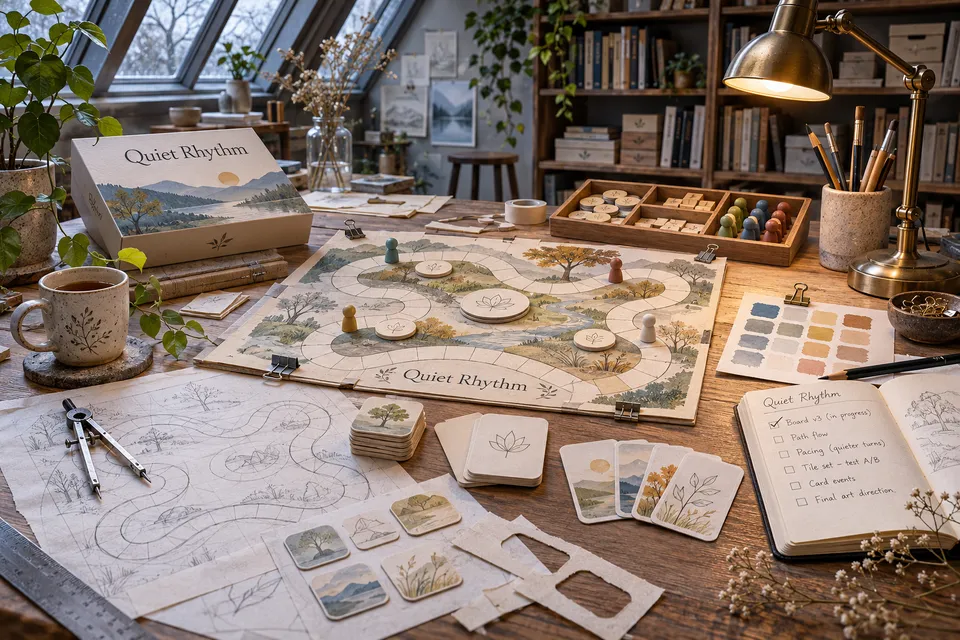
At the workbench
Why stop at six?
With six spaces, everyone can see the whole round. A single repeat still leaves a path to four links. A second repeat makes the target impossible. That small margin is where the conversation starts.
Visit the design tableWhen a round falls short
Keep the final row in place. Trade one leaf and one wave, then count again. Swapping preserves the reserve balance and shows exactly which neighbouring boundaries mattered.
Repair a finished phraseQuestions from the table
What is a link?
A link is a boundary between two different neighbouring motifs. Leaf next to wave makes one link in either order. Two neighbouring leaves score zero at that boundary.
Can we play Quiet Rhythm with two people?
Yes. Share the six spaces and take three turns each. Take turns pointing to the boundary you want to change so both players can follow the plan.
Does every placement have to score?
No. A repeated motif may be the best way to keep the reserves balanced. You can win with one repeated pair if the other four boundaries make links.
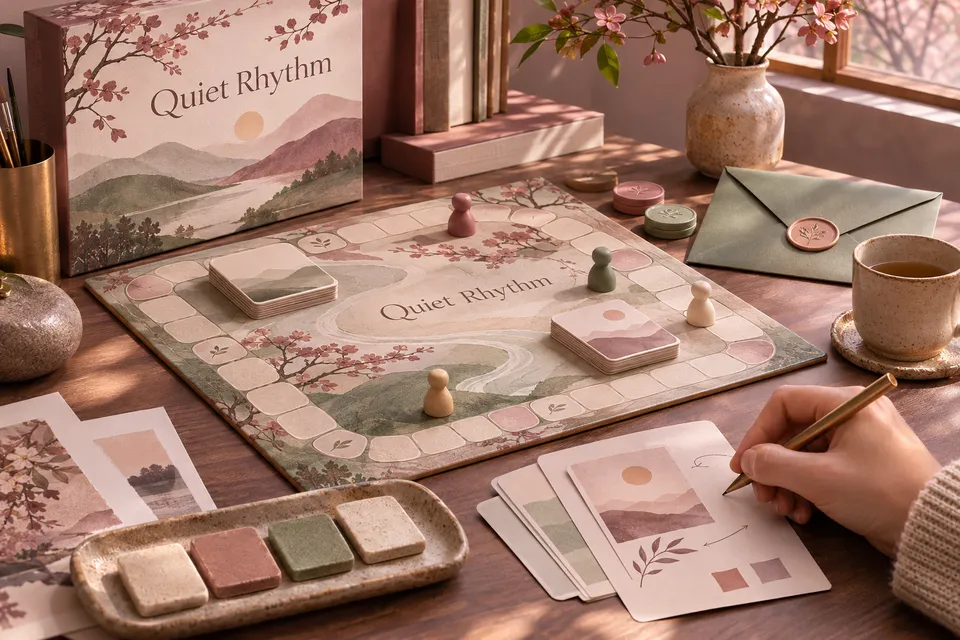
Correspondence
Send a position from your table.
Stuck on a count? Write the six motifs in order and name the variation. The contact desk accepts questions and playtest notes.
Write a note